


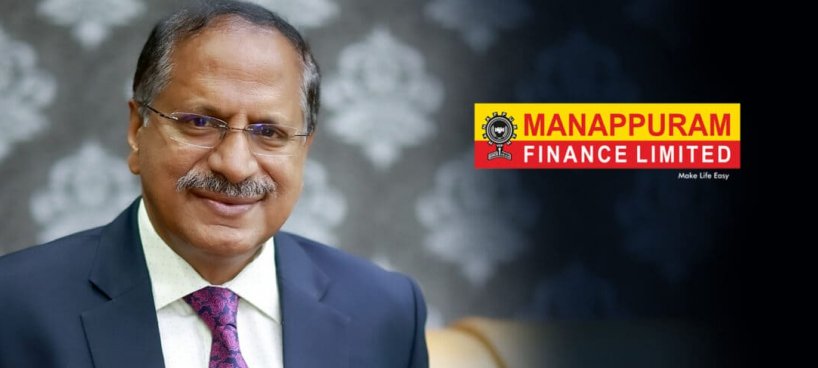
By
V. P. Nandakumar,
Chairman and Managing Director, Manappuram Finance Ltd
As the sun sets on India’s status as a “lower-middle-income” nation, a new, more ambitious horizon is being painted by economists: Viksit Bharat 2047. According to a recent landmark report by the State Bank of India, the mathematics for joining the high-income club is as daunting as it is exhilarating. If the global bar for “high income” rises to $18,000 per capita, India must sustain a compounded annual growth rate (CAGR) of 8.9% for the next 23 years. This isn’t just a growth target; it is an economic marathon run at a sprinter’s pace.
To achieve this, India must solve a classic structural riddle: how to fuel growth in a massive, informal economy where traditional banks often fear to tread. The answer lies in the agility and depth of the Non-Banking Financial Company (NBFC) sector.
Beyond the Bank: The NBFC Edge
While the “Big Banks” provide the stability for heavy industry and infrastructure, they are often constrained by rigid credit-score models and high operational costs in rural areas. This creates a bottleneck for the “Missing Middle”—the MSMEs (Micro, Small, and Medium Enterprises) that contribute nearly 30% to India’s GDP. Despite their importance, these businesses face a persistent credit gap because they lack the “hard collateral,” such as land or machinery, that traditional banks require.
NBFCs have turned this obstacle into an opportunity by pioneering a high-tech, high-touch model. Rather than waiting for a borrower to produce a decade of audited balance sheets, NBFCs can leverage alternative data. By analyzing real-time cash flows, GST filings, and digital transaction footprints, they can assess the creditworthiness of a small-town entrepreneur in hours rather than weeks. This digital-first approach is bringing millions of previously “invisible” businesses into the formal financial fold, directly boosting Gross National Income (GNI).
The GNI Multiplier: From Domestic to Global
Increasing GNI requires more than just making things at home; it requires Indian entities to own assets and earn profits globally. However, a country cannot export its way to high-income status without a robust domestic credit engine. NBFCs act as a catalyst for this wealth creation phase. By financing the expansion of service-sector startups and specialized manufacturing units, they empower Indian companies to scale.
Furthermore, the gold loan and microfinance businesses of NBFCs are essential for mobilizing domestic savings. India has a massive, unproductive stock of household gold. By converting this dormant capital into productive credit, NBFCs increase the velocity of money. When a rural farmer uses a gold loan to buy a tractor or a cold-storage unit, it isn’t just a loan; it’s an investment that increases the national yield and, by extension, the per capita income.
Conclusion: The Collaborative Marathon
The journey from a $4 trillion economy today to a high-income superpower by 2047 is the greatest economic challenge of the 21st century. It requires a synergy where banks provide the volume and NBFCs provide the reach.
If India hits that 8.9% CAGR, it won’t just be because of the giants in Mumbai or Delhi. It will be because a small business owner in a Tier-3 city had access to a fast, digital loan from an NBFC to hire ten more people. In the grand ledger of GNI, every small success counts toward the national dream. The NBFC sector is no longer just a “shadow” to the banks; it is the flashlight leading India toward its $18,000-per-capita future.